Spray polyurethane foam (SPF), commonly called spray foam insulation, lasts 80 to 100 years when properly installed, making it one of the longest-lasting insulation materials on the market. Most homeowners compare this lifespan to fiberglass or cellulose, which typically need replacement in 20 to 30 years.
Closed-cell SPF typically delivers an R-value of about R-5.5 to R-7.0 per inch and resists moisture far better than open-cell foam, while factors like installation quality, application thickness, and surrounding humidity ultimately determine how long any spray foam installation lasts. This guide breaks down that real-world service life, plus the maintenance steps and cost math that come with it.
How Long Does Spray Foam Insulation Last?
Spray foam insulation lasts 80 to 100 years under normal conditions, with closed-cell foam generally outperforming open-cell foam in real-world service life. Closed-cell spray foam uses a dense, rigid cell structure that resists moisture absorption and holds its shape through temperature swings. Open-cell foam is softer and more breathable, and while it does not sag or settle either, its lower density makes it more susceptible to moisture-related performance issues. Although open-cell foam can physically last for decades, these factors typically limit its optimal effectiveness in humid or exposed environments.
Neither foam type sags, settles, or compresses the way fiberglass batts or blown-in cellulose do. Both cure into a fixed shape during application and hold that shape for the life of the building, so spray foam insulation does not need replacing on a fixed schedule the way traditional materials do.
How Long Does Closed-Cell Spray Foam Last Compared To Open-Cell?
Closed-cell and open-cell spray foam share a similar chemistry but perform differently over time because of their density and cell structure.
Closed-cell spray foam insulation typically reaches densities of about
1.75 to
2.25 pounds per cubic foot, while open-cell foam stays closer to
0.4 to
0.5 pounds per cubic foot.
This extra density is the main reason closed-cell foam resists moisture, holds a higher R-value per inch, and lasts at the higher end of the 80 to 100 year range.
|
SPF Insulation Type (Open-Cell vs. Closed-Cell)
|
Performance Lifespan
|
R-Value Per Inch
|
Density
|
Moisture Resistance
|
|
Closed-Cell
|
80-100 years
|
R-5.5 to R-7.0
|
~1.75-2.25 lb/ft3
|
High
|
|
Open-Cell
|
20-30 years
|
R-3.5 to R-3.7
|
~0.4-0.5 lb/ft3
|
Low to moderate
|
Foam density and moisture resistance only tell part of the story. Installation quality and application technique decide whether spray foam reaches its full lifespan potential.
What Factors Affect How Long Spray Foam Insulation Lasts?
Three factors decide how long spray foam insulation lasts in any building:
-
Installation quality determines how well the foam bonds and cures
-
Application thickness controls whether each layer cures evenly
-
Environmental conditions shape how the cured foam performs over time
Each factor interacts with the foam's cell structure to either extend or shorten its real-world service life.
How Does Installation Quality Affect Spray Foam Lifespan?
Installation quality affects spray foam lifespan more than any other variable. Foam applied to a surface that is too hot, too cold, or covered in dust and moisture fails to bond correctly, creating gaps and weak spots that shorten the expected lifespan before the foam even cures.
Applicators who follow the manufacturer's surface preparation and temperature guidelines get a tighter seal that holds for the full 80 to 100 year range.
Does Application Thickness Affect How Long Spray Foam Lasts?
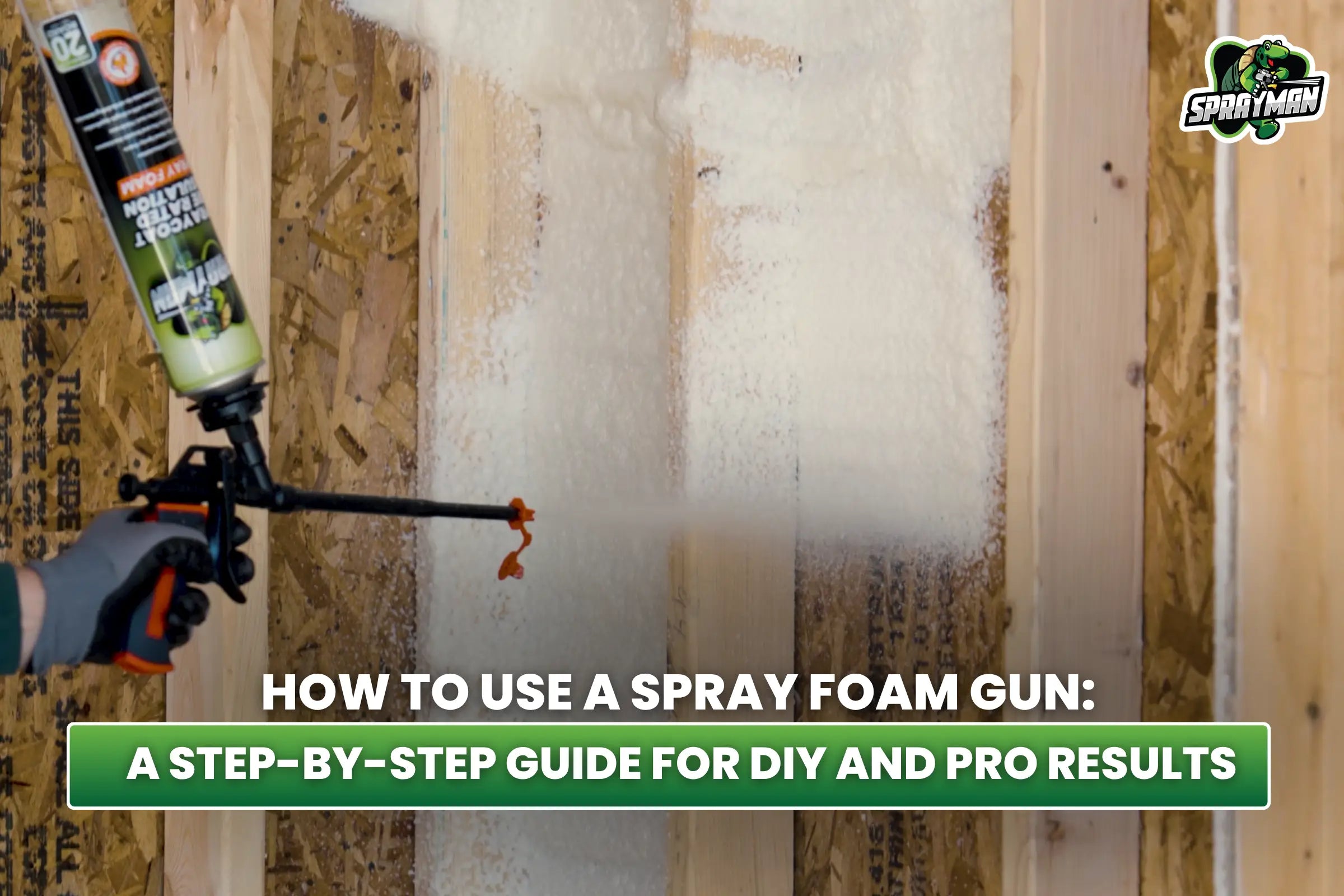
Application thickness affects how long spray foam lasts because foam sprayed too thick in one pass can trap heat and cure unevenly, while foam sprayed too thin leaves gaps in the air seal. Most closed-cell spray foam cans reach a tack-free state within 3 to 8 minutes and a safe cutting time of 30 to 60 minutes, which lets installers build up coverage in thin, even layers instead of one thick pass.
Manufacturers typically recommend a spray distance of about
10 to
20 inches on vertical surfaces, and getting
spray foam insulation thickness right on each pass keeps every layer controlled and fully cured.
How Do Environmental Conditions Affect Spray Foam Insulation Lifespan?
Environmental conditions affect spray foam insulation lifespan by influencing how the foam cures and performs afterward. Most closed-cell spray foam cures best within a surface and ambient temperature range of roughly 40°F to 90°F (4°C to 32°C), with an optimal material temperature near 65°F to 75°F (18°C to 24°C). Foam applied outside this range can cure unevenly, creating weak points that degrade faster under humidity or temperature swings.
Once cured, closed-cell foam's rigid structure resists the freeze-thaw cycles and moisture exposure that wear down fiberglass and cellulose insulation over 20 to 30 years.
How Does Spray Foam Compare To Other Insulation Materials In Lifespan?
Spray foam outlasts most traditional insulation materials by a wide margin. Fiberglass batts can physically last for decades, but compression, moisture, and improper installation often reduce their thermal performance after 20 to 30 years. However, some blown-in fiberglass can reach 80 to 100 years under ideal conditions. Cellulose insulation lasts 20 to 30 years and is more prone to moisture absorption and settling. Mineral wool matches spray foam's lifespan at 80 to 100 years but costs more and requires more labor to install.
The lifespan gap between
open-cell vs. closed-cell spray foam largely comes down to density and moisture exposure, which is why choosing the right type upfront matters as much as installation quality.
|
Insulation Material Lifespan Comparison
|
Performance Lifespan
|
R-Value Per Inch
|
Common Failure Mode
|
Maintenance
|
|
Closed-Cell Spray Foam
|
80-100 years
|
R-5.5 to R-7.0
|
Rare, UV exposure if uncoated
|
Annual inspection
|
|
Open-Cell Spray Foam
|
20-30 years
|
R-3.5 to R-3.7
|
Moisture absorption
|
Annual inspection, moisture check
|
|
Fiberglass Batts
|
20-30 years
|
R-2.2 to R-3.8
|
Sagging, compression
|
Replacement after settling
|
|
Cellulose
|
20-30 years
|
R-3.2 to R-3.8
|
Settling, moisture
|
Moisture and settling checks
|
|
Mineral Wool
|
80-100 years
|
R-3.0 to R-4.2 (varies by density)
|
High cost, labor-intensive
|
Minimal
|
Even with a long lifespan, every insulation material benefits from a few minutes of inspection each year. The sections below cover the warning signs, inspection routine, and special use cases that keep spray foam performing at its rated lifespan.
What Are The Signs Spray Foam Insulation Needs Replacement?
Spray foam insulation rarely needs full replacement, but a few warning signs point to a problem that requires repair. Watch for these 4 signs:
- Visible cracking or separation from framing
- Soft, crumbling, or discolored foam, which signals water intrusion
- A musty smell near insulated walls or attic spaces
- Rising energy bills with no other explanation
Most of these issues affect a small section of foam rather than the entire installation, so repairs usually cost far less than replacing traditional insulation.
Can Spray Foam Insulation Go Bad?
Spray foam insulation does not go bad under normal conditions. Properly installed closed-cell foam remains chemically stable for decades without shrinking, rotting, or breaking down on its own. Industry guidance from the Spray Polyurethane Foam Alliance (SPFA) confirms that properly cured spray polyurethane foam has no defined expiration point and stays structurally sound for the life of the building. Foam degradation that looks like product failure usually stems from poor installation, water intrusion, or long-term UV exposure rather than the foam material itself, which is why routine inspection matters more than the foam's age.
How Often Should You Inspect Spray Foam Insulation For Long-Term Performance?
Spray foam insulation needs an inspection about once a year, ideally during a spring or fall maintenance check. A quick visual check of attics, crawl spaces, and rim joists catches cracking, pest activity, or moisture stains before they spread. Homes in humid climates or areas with frequent pest pressure benefit from inspecting these areas twice a year instead of once.
Does Spray Foam Insulation Resist Pests And Moisture?
Closed-cell spray foam resists pests and moisture better than fiberglass or cellulose because it leaves no loose fibers or paper backing for insects and rodents to nest in. Its solid, closed-cell structure also gives it strong resistance to water absorption, which is one reason
pest-resistant spray foam options hold up well around common entry points like sill plates and crawl space penetrations.
Because closed-cell foam resists water absorption far better than cellulose, it avoids the mold growth that shortens the usable lifespan of paper-based insulation.
Does Spray Foam Insulation Lose R-Value Over Time?
Closed-cell spray foam retains nearly all of its original R-value over time because its rigid structure does not compress or settle the way fiberglass does. This stable thermal performance is a major reason closed-cell foam keeps delivering close to its rated R-value decades after installation, unlike materials that lose insulating value as they age, which helps explain why spray foam remains one of the better long-term investments among insulation materials.
Is Spray Foam Insulation Worth The Cost Over Time?
Spray foam insulation is worth the cost over time for most homeowners because its
80 to
100 year lifespan changes the cost-per-year math compared to shorter-lived materials. A material that needs replacement every
20 years requires
3 to
4 replacement cycles over the same period spray foam stays in place, and each cycle adds labor and material costs spray foam avoids entirely. Comparing the full breakdown of
spray foam insulation costs against those repeated replacement cycles is what makes the higher upfront price pay off long term.
Air sealing and adding insulation can cut heating and cooling costs by an average of 15% in a typical home, according to the U.S. Department of Energy, and spray foam's air-sealing performance helps homeowners capture those savings every year the foam stays in service.
How Does DIY Application Affect Spray Foam Insulation Lifespan?
DIY application affects spray foam insulation lifespan mainly through surface prep and layering technique, not the foam chemistry itself. Single-component, moisture-cure spray foam cans use the same closed-cell formula as professional two-component systems, so a careful DIY installer can reach the same 80 to 100 year lifespan as a professional job.
The main DIY risk is overspraying in one thick pass instead of building up thin layers, which can leave the foam's core uncured. Following the can's temperature and layering guidance closes most of that gap.
How Long Does Spray Foam Last Around Windows And Doors?
Spray foam insulation around windows and doors typically lasts as long as the surrounding wall assembly, often
20 to
30 years or more, because these gaps see less moisture and temperature swing than exterior walls or rooflines. Sprayman's
Window/Door Foam formula uses low expansion to fill gaps around frames without bowing them out of square.
Because window and door foam is usually a small, contained application, it rarely needs repair unless the surrounding caulk or weatherstripping fails first.
How Many Cans Of Spray Foam Do You Need For A Long-Lasting Seal?
Canned closed-cell spray foam typically covers about 15 to 25 board feet per can at a 1-inch thickness, so a project that needs 2 inches of coverage over a 100 square foot area often requires somewhere between 8 and 13 cans depending on the brand's yield. Buying in volume on larger attic, basement, or crawl space projects keeps material costs on budget without sacrificing the coverage needed for a full, long-lasting seal.
Underfilling a project to save on cans is one of the most common mistakes that shortens spray foam's effective lifespan, since thin spots fail to seal air leaks even if the rest of the application cures correctly.
How Do You Choose Spray Foam Insulation That Lasts?
To choose spray foam insulation that lasts, prioritize closed-cell formulas, correct application thickness, and annual inspections over price alone. Closed-cell spray foam is one of the few insulation materials that can realistically last for the lifetime of a home, delivering decades of air sealing, thermal performance, and moisture resistance with minimal maintenance.
Ready to start a project built to last decades? Explore Sprayman's Spraycoat closed-cell spray foam, and stock up for larger jobs through
Buy More Pay Less for volume pricing on multiple cans.
Frequently Asked Questions
How long does spray foam last?
Spray foam lasts 80 to 100 years when it is closed-cell and installed correctly. Open-cell foam can physically last just as long, but humid or moisture-exposed conditions typically limit its optimal performance to about 20 to 30 years, since neither type sags or settles on its own.
How long does spray insulation last?
Spray insulation lasts as long as traditional spray foam insulation, since the terms describe the same closed-cell and open-cell polyurethane products. Expect 80 to 100 years from closed-cell formulas, while open-cell formulas can physically last as long but typically deliver optimal performance for about 20 to 30 years in most homes.
How long does foam insulation last in a house?
Foam insulation lasts as long as the building in most cases, since closed-cell spray foam does not sag, settle, or need scheduled replacement the way fiberglass and cellulose do.
Does spray foam insulation need to be replaced?
Spray foam insulation rarely needs full replacement. Cracking, water damage, or pest intrusion may require a localized repair, but the surrounding foam typically continues performing for its full 80 to 100 year lifespan.
Sources
- U.S. Department of Energy, Energy Saver: Air Sealing Your Home, energy.gov
- Spray Polyurethane Foam Alliance (SPFA), Spray Foam Performance and Durability Guidance




Leave a comment
This site is protected by hCaptcha and the hCaptcha Privacy Policy and Terms of Service apply.