


What Is Polyurethane Foam Sealant?
What is polyurethane foam sealant? At its core, it is a high-performance sealing foam that expands upon contact with air and moisture. Most modern foam spray products are polyurethane-based due to their incredible adhesion to wood, metal, and masonry.
Chemical Composition of Expanding Foam Sealant
The chemical composition of expanding foam sealant typically involves polyurethane prepolymers, catalysts, and blowing agents. When dispensed, the foam reacts chemically and cures into a rigid or semi-rigid solid that provides durable air sealing and improves overall thermal efficiency.
How Does Expanding Foam Sealant Work?
- Dispensing: The liquid is released via a straw applicator (for one-time DIY use) or a pro gun (for precision and reuse).
- Expansion: The foam reacts with humidity, expanding to fill irregular cavities and deep cracks.
- Curing: The foam hardens, creating a durable layer that provides superior air sealing performance.
Gun Foam vs. Straw Applicator: Choosing the Right Application Method
- Gun Foam (Pro Series): Requires a dispensing gun. Ideal for large projects, offering better control, higher yield (e.g., 24 oz cans), and less waste since the can can be reused.
- Straw Applicator: Great for quick, one-time DIY fixes. These typically come in smaller 12 oz cans and are ready to use out of the box.

Choosing the Right Foam: Types and Expansion Rates
Not all gaps are created equal. Choosing between high expansion vs low expansion foam sealant is the difference between a perfect seal and a damaged window frame.
Comparison: Expansion Levels & Best Uses
The table below highlights the key differences between low and high expansion foam sealants.
|
Feature |
Low Expansion Foam Sealant |
High Expansion Foam Sealant |
|
Expansion Rate |
Minimal, controlled expansion |
Aggressive expansion for void filling |
|
Best For |
Windows, doors, trim gaps, precise applications |
Gaps & cracks, fire blocking, pest control, outdoor voids |
|
Application Style |
Low-pressure, precision sealing |
High-volume gap filling |
|
Risk Factor |
Won’t bow frames or distort materials |
Can overexpand if misapplied |
|
Key Term |
Minimal expansion foam |
Best expanding foam for large gaps |
Foam Sealant Use Cases
Foam sealants are engineered for specific use cases, and selecting the right formulation depends on where and how the sealant will be applied. Below are the most common application scenarios and the foam types best suited for each.

Low Expansion Foam Sealant for Windows & Doors
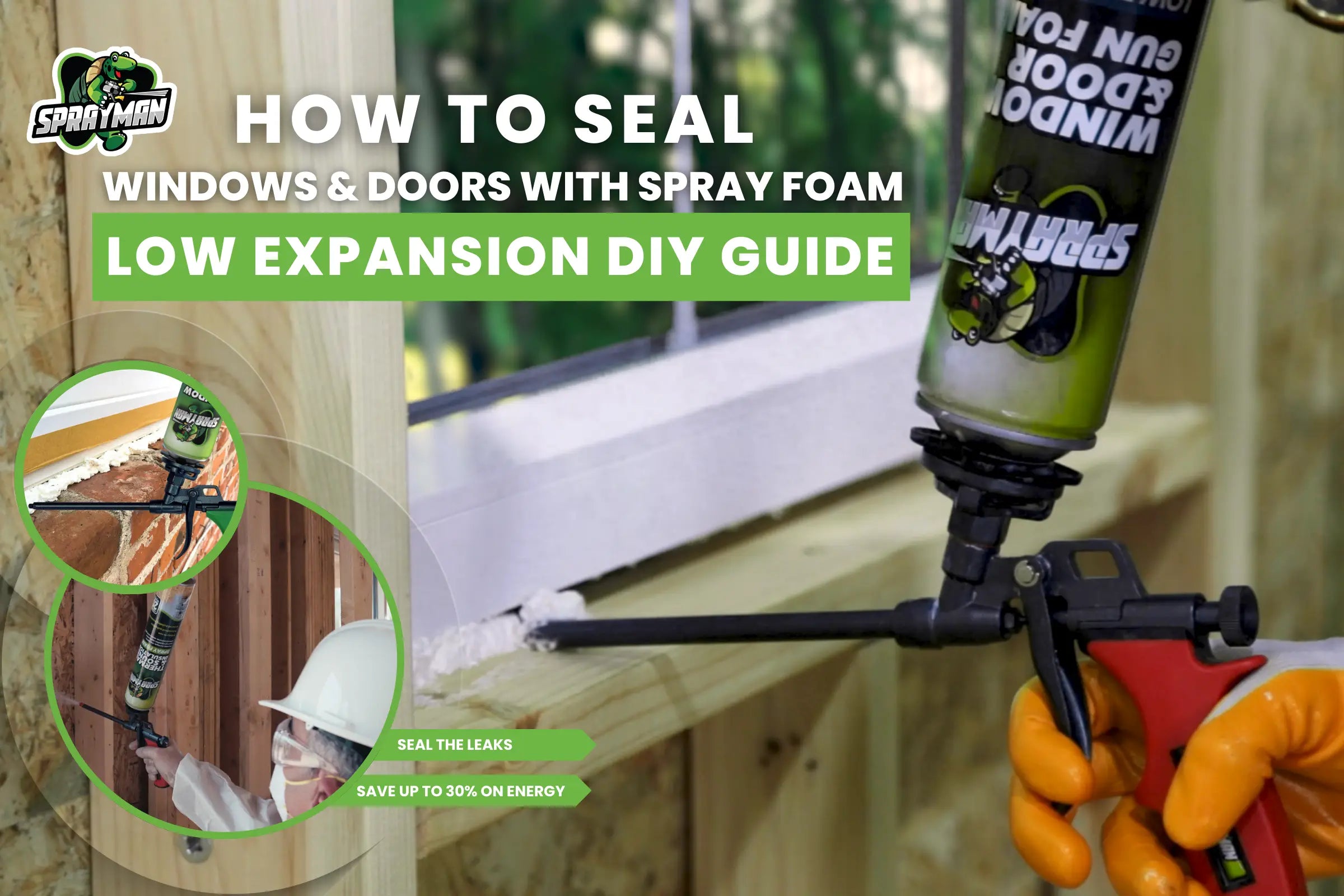
Window and door installations require precise control during application. Low expansion foam sealants are designed to apply minimal pressure while curing, preventing frame distortion and ensuring long-term performance. This makes them the preferred solution for sealing gaps around window frames, door jambs, and trim areas.
For a practical, step-by-step breakdown of how to apply low expansion spray foam correctly around window and door frames, see our detailed guide on how to seal windows and doors with spray foam.
Fire Block Foam Sealant for Electrical & Plumbing Penetrations
Fire block foam sealants are used to seal service penetrations while helping slow the spread of fire and smoke between wall cavities. These products are commonly applied around electrical wiring, plumbing lines, and HVAC penetrations where building codes require fire-resistant sealing solutions.
For comprehensive guidance on where, how, and when to use fire blocking foam safely, including code requirements and application best practices, read our complete Fire Block Foam Uses Guide.
Pest Blocker Foam for Rodent & Insect Entry Points
Small gaps around foundations, garages, and utility lines are common entry points for pests. Pest blocker foam sealants are formulated to deter rodents and insects while sealing these vulnerable areas, making them a reliable solution for long-term pest prevention.
Unlike chemical treatments or traps that require ongoing maintenance, pest blocker foam creates a lasting physical barrier while simultaneously improving your home's energy efficiency. For detailed guidance on application locations, effectiveness against specific pests, and how to maximize results with complementary prevention methods, explore our complete guide to pestblock foam for DIY pest control.
Black Foam Sealant for Outdoor, Pond & Landscaping Applications
Outdoor projects often require a sealant that blends naturally into the environment. Black foam sealants are widely used for ponds, waterfalls, landscaping features, and RV applications where visibility and weather exposure are key considerations.
Whether you're sealing pond liners, bonding landscape stones, or repairing RV underbellies, understanding when to choose black foam over standard options ensures professional results. Explore our complete black foam sealant applications for product selection criteria, application techniques, and project-specific best practices.
Gaps & Cracks Foam for General Home Sealing
For everyday sealing tasks, foam sealants offer a practical solution for filling small to medium-sized voids. These applications include baseboards, siding transitions, utility openings, and other areas where air leakage and drafts commonly occur.
Whether you're addressing a single gap or conducting whole-home air sealing, understanding proper application techniques ensures maximum energy savings. Learn more about selecting and applying general-purpose foam in our complete gaps and cracks sealing guide.
Technical Specifications: Drying and Curing
-
Tack-Free Time: 10–20 minutes.
-
Trim-Ready: 1 hour.
- How long does foam sealant take to cure? A full chemical cure usually takes 8 to 24 hours, depending on humidity levels.
Conclusion
Frequently Asked Questions (FAQ)
What is the difference between spray foam insulation and foam sealant?
Spray foam insulation is designed to cover large surface areas (like a whole wall) for thermal R-value. Foam sealant is a specialized product designed to target specific gaps, cracks, and penetrations.
Foam sealant vs caulk for exterior gaps: Which is better?
For large, irregular gaps (over 1/4 inch), use sealant foam. For small, linear joints that require a smooth finish, caulk is better. Specifically, acrylic latex caulk vs polyurethane foam sealant comes down to aesthetics versus insulation; foam insulates, caulk finishes.
When to use expanding foam vs silicone sealant?
Use expanding foam for stationary gaps that need insulation. Use silicone for joints that expect movement (like bathtubs or expansion joints) or where a clear, flexible seal is needed.
Does expanding foam break down in sunlight?
Yes. UV rays degrade the foam. You must paint over spray foam sealant or cover it if it's exposed to the sun.
How to trim cured spray foam sealant?
Once fully cured, use a serrated knife or a sharp utility blade.
How to remove expanding foam from skin?
If wet, use acetone (nail polish remover). If dry, you must wait for it to wear off naturally; how to dissolve dried polyurethane foam chemically is difficult without damaging skin.
Is cured foam sealant toxic?
No. Once fully cured, it is inert and safe for household environments.

Leave a comment
This site is protected by hCaptcha and the hCaptcha Privacy Policy and Terms of Service apply.