

Insulating a pole barn is different from insulating a standard house. Pole barns often have wide open spans, exposed framing, metal siding, and metal roofing, which makes heat control, air sealing, and condensation management more difficult.
Spray foam insulation can be a strong option for pole barns because it expands into gaps, helps reduce air leaks, and adds thermal resistance in one application. Closed-cell spray foam is especially useful for pole barn walls and metal building surfaces where moisture resistance and durability matter.
This guide explains how to insulate a pole barn with spray foam, how to choose between closed-cell and open-cell foam, what affects spray foam insulation cost, and what to check before applying foam to metal panels.

What Is the Best Insulation for a Pole Barn?
The best insulation for a pole barn depends on how the building is used, whether it is heated, and what the main performance goal is. Closed-cell spray foam insulation is often the strongest choice for most pole barn walls because it combines thermal resistance, air sealing, and moisture control in a single application. It typically delivers R-5.6 to R-7.0 per inch of thickness and forms a rigid, dense layer that does not sag or shift over time.
Open-cell spray foam is softer and more vapor-permeable. It costs less per square foot but is not the right fit for exposed metal panels or areas with condensation risk. Fiberglass batts and rigid board insulation are sometimes used in pole barns, but neither seals gaps nor follows irregular framing the way spray foam does. For pole barn walls, air sealing is just as important as thermal resistance, and spray foam handles both at once.
|
Pole Barn Use |
Priority |
Best Foam Type |
|
Equipment storage |
Condensation control |
Closed-cell |
|
Workshop or garage |
Comfort and air sealing |
Closed-cell |
|
Heated space |
Heat retention |
Closed-cell, appropriate thickness |
|
Hobby room or gym |
Comfort and sound control |
Closed-cell or mixed strategy |
|
Agricultural use |
Moisture and ventilation |
Project-specific review |
Why Is Insulating a Pole Barn Different From Insulating a House?
Insulating a pole barn differs from insulating a house because pole barns use post-frame construction with wide open spans, exposed framing, metal siding, and metal roofing instead of sheathed cavities and drywall.
Metal panels create 4 specific problems that standard insulation materials do not fully address: condensation on interior surfaces, drafts through large gaps around overhead doors, heat loss through uninsulated roof panels, and air infiltration at wall-to-slab transitions. Fiberglass batts sit in a cavity but do nothing about these gaps. Spray foam expands into irregular spaces and seals both thermal and air pathways at the same time, which is why it performs better in pole barn conditions. Choosing between closed-cell and open-cell foam is the next decision, and it depends on where in the building the foam will go.

How Do You Choose Between Closed-Cell and Open-Cell Foam for a Pole Barn?
Choose closed-cell foam for pole barn walls, metal panels, and any area where moisture or condensation is a concern. Choose open-cell foam only for interior ceiling cavities where vapor permeability is acceptable and the roof assembly supports it.
Where closed-cell foam works best
Closed-cell foam is the right choice for 5 key pole barn locations: metal wall panels, base plates and perimeter gaps, wall corners, rim areas around overhead doors, and condensation-prone surfaces. It typically delivers R-5.6 to R-7.0 per inch, which means 2 inches of coverage can reach between R-11.2 and R-14.0, depending on the product. It also resists moisture absorption better than fibrous insulation materials, so it stays effective even in buildings that are not climate-controlled year-round.
Where open-cell foam may work
Open-cell foam may suit some pole barn roof deck or ceiling applications when the assembly allows vapor movement. Its vapor-permeable structure can also make roof leaks easier to notice from the interior, rather than hiding water behind a dense foam layer. Budget and sound absorption can also be factors.
However, open-cell foam should not be treated as a universal moisture-control solution. Around cold metal surfaces, the building may require additional moisture planning, especially in colder climate zones or in buildings with high indoor humidity. In many metal pole barns, closed-cell foam remains the safer and more durable choice for exposed walls and condensation-prone surfaces. With the right foam selected, the next step is applying it correctly.
How to Insulate a Pole Barn with Spray Foam Step by Step
To insulate a pole barn with spray foam, follow these 6 steps in order. Skipping surface prep or rushing layer thickness are the 2 most common causes of poor results.
- Decide how the space will be used: A cold storage barn needs basic condensation control. A heated workshop needs wall and roof insulation. A finished room may need code-compliant thermal barriers over the foam.
- Inspect metal panels, framing, and gaps: Look for rust, oil residue, moisture, loose fasteners, and wide gaps. Spray foam does not adhere well to wet, oily, or dusty surfaces.
- Choose the right foam type: Use closed-cell foam for exposed walls and metal surfaces. Confirm the roof assembly before selecting open-cell foam for any ceiling area.
- Calculate coverage in board feet: One board foot covers a 12 x 12 inch area at 1 inch thick. Spraying 500 square feet at 2 inches requires 1,000 board feet of product. To size your own barn without the manual math, enter its walls and roof into the spray foam calculator for the board feet and can count.
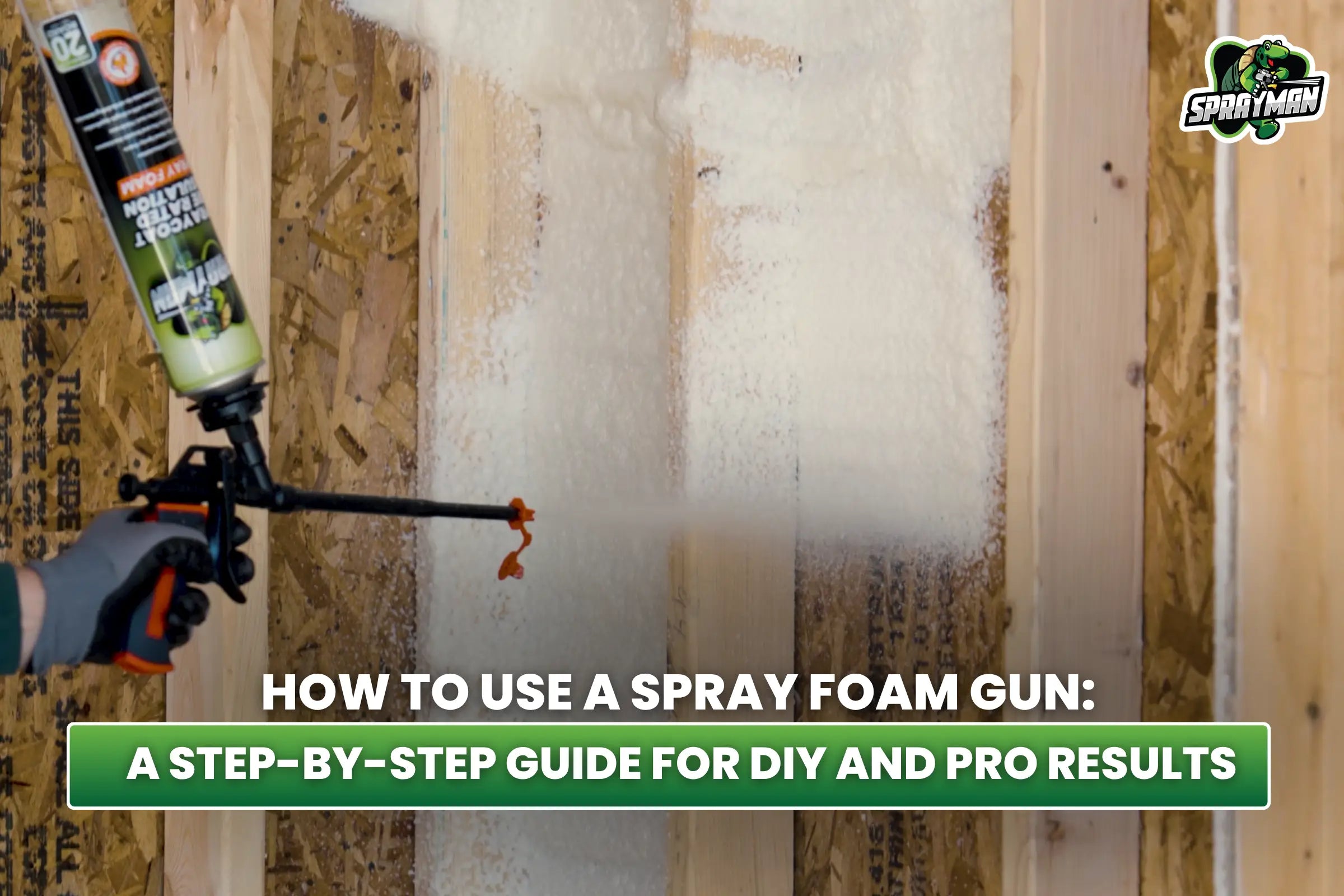
- Apply foam in controlled layers: Follow manufacturer's instructions for surface temperature, humidity, and cure time. Learn how to use a spray foam gun for even passes and consistent thickness across the surface.
- Plan for fire safety requirements: Class A-rated spray foam does not automatically mean the foam can be left exposed in every application. Local code may still require an approved thermal barrier or ignition barrier over exposed spray foam in workshops, garages, finished rooms, or frequently accessed areas. Confirm requirements before leaving foam exposed.

What Affects Spray Foam Insulation Performance in a Pole Barn?
Spray foam type and thickness are the main factors, but 3 additional areas affect whether a pole barn insulation project delivers the results the building needs: metal panel compatibility, project cost, and the full range of performance benefits.
Does spray foam insulation for metal buildings work differently than for wood?
Spray foam insulation for metal buildings works differently because metal panels expand and contract with temperature changes. Some panel manufacturers also restrict direct foam application, so checking the warranty before starting is important. Spray foam insulation for metal buildings can often be applied directly to clean metal surfaces, but check the panel warranty first. Some pole barns have a house wrap or building wrap behind the metal siding. In that case, foam goes on the wrap side instead of the bare metal, which makes future panel replacement easier. Always clean the surface of oil, rust, and moisture before applying foam.
How much does spray foam insulation cost for a pole barn?
Spray foam insulation cost for a pole barn depends on the square footage, foam thickness, and whether the project is DIY or professionally installed.As a general reference, some DIY closed-cell spray foam cans cover about 20 square feet at 1 inch thickness per can. For small to medium DIY areas, DIY closed-cell spray foam cans are practical and easy to control. For full-building commercial-scale insulation, compare total board footage, labor, access, and local code requirements before choosing between cans, larger kits, or professional installation.
For a detailed breakdown by project size and product type, see the full spray foam insulation cost guide.
What are the main benefits of spray foam insulation for a pole barn?
The main benefits of spray foam insulation for a pole barn include better air sealing, improved temperature control, and lower condensation risk when the foam is applied correctly.
The 3 most relevant benefits for pole barn owners are: closed-cell foam reduces uncontrolled air movement through gaps and seams; its thermal resistance compounds quickly with each additional inch of thickness; and it resists moisture better than many fibrous insulation materials, which helps it stay stable in many non-climate-controlled buildings.
For a full comparison of advantages and tradeoffs, see the complete guide to the benefits of spray foam insulation. The questions below cover the most common decisions pole barn owners face before starting an insulation project.
Frequently Asked Questions About Pole Barn Spray Foam Insulation
Is spray foam worth it for a pole barn?
Spray foam is worth it for a pole barn when the building is used for work, storage, or climate-controlled activities. Closed-cell foam reduces drafts, helps reduce condensation risk, and creates a dense insulation layer on wall surfaces. For a cold storage building with no temperature control goals, simpler options may be sufficient.
Should I use closed-cell or open-cell foam for pole barn walls?
Use closed-cell foam for pole barn walls, especially on exposed metal panels or condensation-prone surfaces. Open-cell foam may work in protected ceiling or roof assemblies, but the right choice depends on climate zone and building use. In colder climates, closed-cell foam is the more predictable option.
Can spray foam be applied directly to metal siding?
Spray foam can often be applied to clean, dry metal siding, but check the metal panel warranty and surface condition first. Make sure the metal panel or building-wrap surface is clean, dry, stable, and approved for foam adhesion. Direct application may affect future panel replacement or manufacturer warranty. Apply foam to the wrap side instead of bare metal if a house wrap is installed behind the siding.
Does a pole barn with spray foam still need ventilation?
Yes. Spray foam helps reduce uncontrolled air leaks, but ventilation is still necessary in buildings used for vehicles, livestock, heated work, or activities that produce moisture. Ridge vents, exhaust fans, and dehumidification should be part of the overall plan.

Leave a comment
This site is protected by hCaptcha and the hCaptcha Privacy Policy and Terms of Service apply.