

A thermal barrier is a fire-protective layer, most often half-inch gypsum wallboard, installed between foam plastic insulation and the occupied space of a building. Spray polyurethane foam is a combustible foam plastic, so applicable building codes commonly require it to be protected by an approved thermal barrier when installed adjacent to occupied interior space, unless an approved exception or tested assembly applies. A 15-minute thermal barrier limits the average temperature rise on the unexposed side to no more than 250°F (121°C) during a standardized fire test, a specific test benchmark rather than a guaranteed evacuation time. Not every space needs the same protection: some attics and crawl spaces qualify for a lighter ignition barrier instead.

What Is a Thermal Barrier?
A thermal barrier is a material or assembly installed over foam plastic insulation to limit heat transmission and delay the foam's involvement in a fire. Choosing the right spray foam insulation is only part of a compliant assembly, since the insulation also needs to be separated from occupied space by an approved thermal barrier. Half-inch gypsum wallboard is a commonly specified prescriptive thermal barrier under adopted building codes, and any alternative material has to perform at least as well under fire testing to qualify as an approved equivalent. Gypsum wallboard is one part of a code-compliant assembly, alongside correct installation and the locally adopted code.
What Is a 15-Minute Thermal Barrier?
A 15-minute thermal barrier is a material or assembly evaluated under standardized fire conditions to limit heat transmission and hold up for the required test period. To qualify, a barrier has to keep the average temperature rise on the unexposed surface at or below 250°F (121°C) after 15 minutes, following the ASTM E-119 time-temperature curve, and it has to stay in place for that same period rather than fail or fall away. Industry guidance from the Spray Polyurethane Foam Alliance refers to a barrier meeting both of these tests as having an "index of 15." Exact acceptance criteria can still vary by jurisdiction and code edition.
Why Does Spray Foam Insulation Need a Thermal Barrier?
Spray foam insulation needs a thermal barrier because foam plastics are combustible and can contribute to fire spread if left exposed inside a living space. This applies to spray foam insulation generally, not to any one brand, and an approved thermal barrier is a key part of a code-compliant spray foam assembly behind interior walls and ceilings. Different locations can be subject to different protection requirements, especially certain qualifying attics and crawl spaces.

What Is the Difference Between a Thermal Barrier and an Ignition Barrier?
A thermal barrier and an ignition barrier are not the same requirement. A thermal barrier protects the occupied interior space and must comply with the applicable prescriptive requirement or an approved equivalent 15-minute protection path. An ignition barrier is a lighter-duty option some codes allow in attics and crawl spaces where entry is limited to servicing utilities, using thinner, different materials.
|
Requirement |
Where It Applies |
Materials That May Appear in Adopted Codes |
|
Thermal barrier |
Occupied interior space |
Half-inch gypsum wallboard, or an approved equivalent meeting the applicable 15-minute thermal-barrier criteria |
|
Ignition barrier |
Certain qualifying attics and crawl spaces with limited access and use |
Mineral fiber insulation, wood structural panel, particleboard, hardboard, gypsum wallboard, or corrosion-resistant steel, at reduced thicknesses compared to a full thermal barrier |
This is not a universal approval list. Material type, thickness, fastening, and assembly requirements should be confirmed in the locally adopted code and product documentation. Attics and crawl spaces are the most common places this distinction comes into play.
Do Attics and Crawl Spaces Need a Thermal Barrier?
Not always. Model code provisions and some adopted codes may allow qualifying attics and crawl spaces to use an ignition barrier instead of the full thermal barrier, where entry is made only for repairs, maintenance, or servicing utilities, and the space is covered with a prescriptive ignition barrier or is part of a specifically tested assembly. This exception depends on limited access and use conditions and shouldn't be assumed automatically. Storage, occupancy, product approval, and the locally adopted code must all be checked before substituting an ignition barrier for the full thermal barrier. The need for fire protection is separate from whether the underlying insulation is open-cell or closed-cell spray foam, though the approved protection method can depend on the specific product and tested assembly.

What Are Thermal Barrier Coatings?
A thermal barrier coating, in this context, is a spray or trowel-applied intumescent product used as an alternative to gypsum board, expanding when exposed to heat to form a protective layer. The approval should cover the specific foam, substrate, coating thickness, application method, and intended use condition involved, including the required dry-film thickness and coverage rate, not just the coating product in isolation. A product marketed as "fire-resistant" isn't automatically an approved 15-minute thermal barrier; only products or assemblies backed by the required evaluation and approval documentation should be treated as one. This is a different term from the unrelated industrial "thermal barrier coating" used on high-temperature engine components.
How Does a Thermal Barrier Relate to Thermal Bridging?
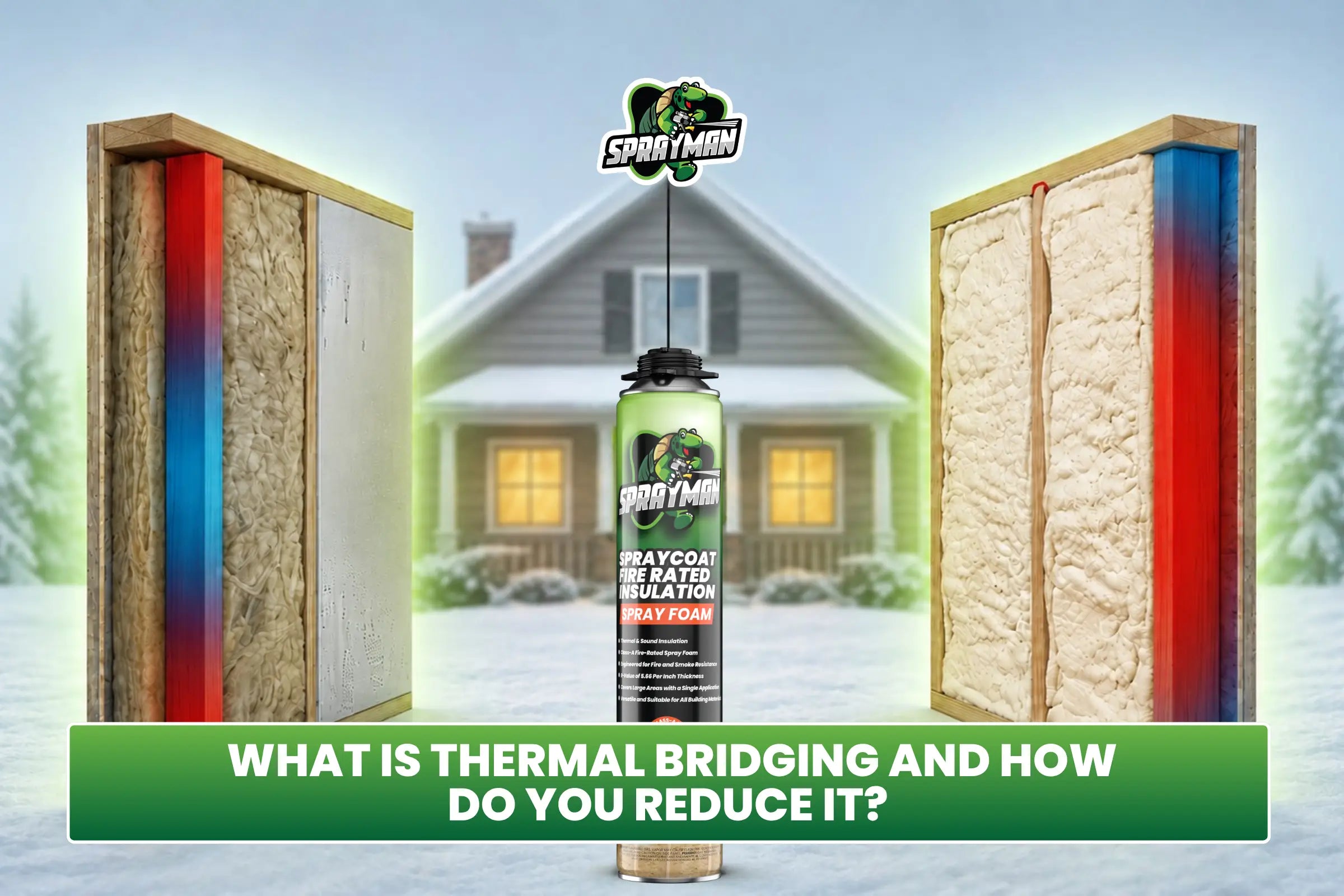
A thermal barrier and thermal bridging address different problems. Thermal bridging is heat escaping through a conductive path like a stud or joist, while a thermal barrier is a fire-protection layer required over foam plastic insulation. Spray foam is often used to reduce thermal bridging at framing points, which is why both matter on the same project; see our guide on what thermal bridging is and how to reduce it.
Frequently Asked Questions
The following questions come up most often when homeowners research thermal barrier requirements for spray foam.
Is Drywall a Thermal Barrier?
Yes. Half-inch gypsum wallboard is a commonly specified prescriptive thermal barrier in building-code provisions and is summarized as such in SPFA-126. Local requirements should still be confirmed.
Does All Spray Foam Need a Thermal Barrier?
Spray foam installed adjacent to occupied interior space generally requires the protection specified by the applicable code, unless an approved exception or tested assembly applies.
Can I Install a Thermal Barrier Myself?
Installing gypsum wallboard is a common DIY task, but the full assembly, including fastening, joints, and any required inspection, has to meet the applicable code. Coated alternatives should only be used when the product documentation and approval cover the specific foam and assembly. Confirming the approved assembly and inspection requirements before work begins can prevent costly rework.
Does an Attic Need a Thermal Barrier?
Not always. Some qualifying attics can use an ignition barrier or a product-specific tested assembly instead, but the answer depends on access, storage, occupancy, product approval, and the locally adopted code.
What Is a Thermal Barrier for Spray Foam?
A thermal barrier for spray foam is half-inch gypsum wallboard or an approved equivalent required to cover spray polyurethane foam insulation for fire protection. It is sometimes referred to as thermal barrier insulation, though that name can be misleading: the barrier's primary job is fire protection rather than thermal performance, working alongside the insulation rather than replacing its thermal resistance.
Conclusion
A thermal barrier is a code-required fire-protection component in many spray foam assemblies, not merely a cosmetic finish. Gypsum wallboard remains a simple, commonly specified option for occupied interior space, while some attics and crawl spaces may qualify for a lighter ignition barrier depending on local code. Requirements vary by jurisdiction, code edition, and product approval, so confirm the current rules before installation.
Explore Sprayman spray foam insulation options, then verify the required thermal or ignition protection under the product documentation and locally adopted code before installation.
Sources
- Spray Polyurethane Foam Alliance. SPFA-126: Thermal and Ignition Barriers for the SPF Industry. Relevant sections address 15-minute thermal-barrier temperature-transmission and fire-integrity criteria, along with ignition-barrier provisions for qualifying attics and crawl spaces. https://www.sprayfoam.org/technical-documents/
- ASTM International. ASTM E119: Standard Test Methods for Fire Tests of Building Construction and Materials. https://store.astm.org/standards/e119
Code notice: Requirements vary by jurisdiction, adopted code edition, amendments, tested assembly, and product approval. Confirm the applicable requirements before installation.

Leave a comment
This site is protected by hCaptcha and the hCaptcha Privacy Policy and Terms of Service apply.