
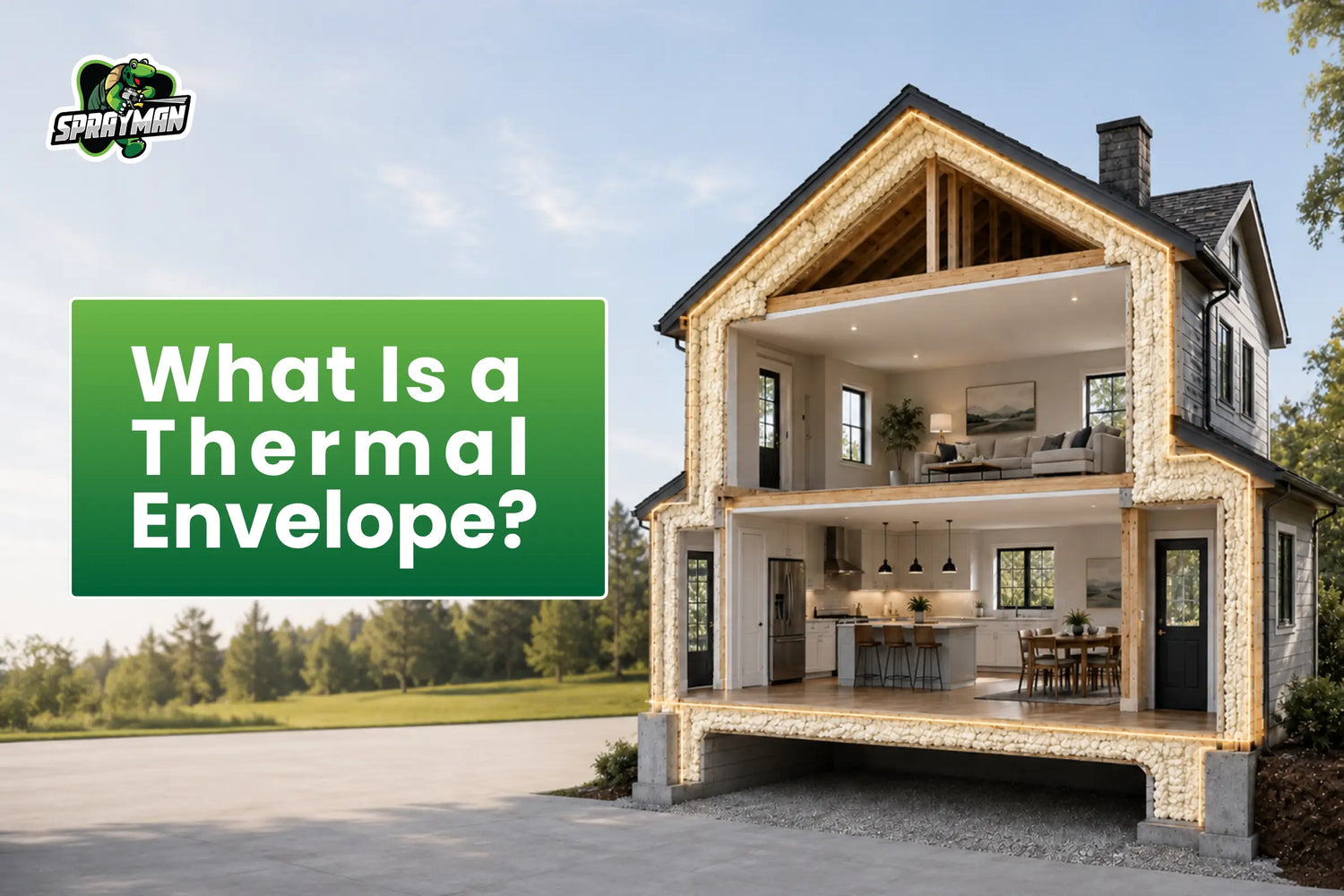
A thermal envelope, sometimes called the building thermal envelope, is the continuous boundary that separates conditioned indoor space from outdoor or unconditioned space, made up of the walls, roof, floor, windows, doors, and the insulation and air sealing built into all of them. Its job is to control how much heat moves in and out of your home: indoor air can leak out while outdoor air leaks in, forcing the heating or cooling system to work harder. Spray foam insulation can strengthen a thermal envelope by adding insulation and air sealing in a single application, especially at irregular gaps and framing junctions.

What Parts Make Up a Home's Thermal Envelope?
A home's thermal envelope consists of six connected parts: insulation, air barriers, exterior walls, the roof or attic floor, the foundation or crawl space, and windows and doors. These materials and assemblies work together as a continuous heat-control boundary. When any part of this envelope has gaps, thin insulation, or air leaks, the system loses that continuity and your heating or cooling system has to work harder to compensate.
What Is the Difference Between a Thermal Envelope and a Building Envelope?
A building envelope and a thermal envelope are closely related but not identical. The building envelope comprises the physical assemblies that separate indoor and outdoor conditions, such as structural framing, water-control layers, air-control layers, insulation, windows, and doors. The thermal envelope is the continuous heat-control boundary formed by insulation, air-control layers, windows, doors, and the assemblies that connect them. In casual use, the terms are sometimes used interchangeably. Insulation and air-sealing work can improve the thermal performance of the broader building envelope, but water, vapor, and structural control layers may require separate solutions.
Why Does the Thermal Envelope Matter for Energy Efficiency?
The thermal envelope matters because it determines how much energy your home wastes trying to maintain a comfortable temperature. A well-sealed, well-insulated envelope keeps conditioned air inside, reduces the load on your HVAC system, and evens out temperature differences between rooms. A weak envelope does the opposite: it lets heat escape in winter and enter in summer, so your system runs longer and your utility bills climb, even if your thermostat setting never changes.

What Are the Weakest Points in a Home's Thermal Envelope?
Many thermal-envelope problems occur at transitions and irregular spaces, although large under-insulated wall, roof, or floor areas can also be major sources of heat loss. Rim joists, attic access hatches, sill plates, and the junctions where walls meet floors or rooflines are common locations for heat loss and air leakage in a home. These are also the areas where poorly fitted batt insulation is most likely to leave a small gap, and even small discontinuities can noticeably reduce comfort and air-sealing performance.
How Does Spray Foam Insulation Strengthen the Thermal Envelope?
Spray foam strengthens the thermal envelope by expanding to conform to irregular gaps that can be difficult to address with rigid board or batt insulation alone, sealing air leaks and adding insulation in the same step. Choosing a suitable spray foam insulation product for the job matters, and product type, expansion rate, substrate condition, application thickness, temperature, and installer technique all affect the final seal. This matters most at the weak points described above, since sealing a rim joist bay or the gaps around a sill plate closes the kind of small, hard-to-reach gap that poorly fitted batt insulation may leave open. Rim-joist applications should still follow the product instructions, required foam thickness, fire-protection rules, and any local inspection requirements.
For an attic hatch, sealing the gaps around the hatch frame and insulating the hatch panel itself, rather than foaming the moving part directly, addresses a common air-leakage point. Closed-cell spray foam generally provides more R-value per inch than many common cavity-insulation materials, which can be useful where assembly depth is limited.

Where Should You Start When Improving Your Thermal Envelope?
Start by identifying the largest air leaks and insulation gaps in your own home rather than assuming every home has the same priority list; a visual inspection or an energy assessment is the most reliable way to do this. That said, rim joists and attic access areas are common starting points for suitable DIY-rated products and accessible projects, and often the source of noticeable drafts. Sill plates and wall-to-foundation junctions are also common areas to inspect, particularly where drafts or moisture staining are present. Any bulk-water intrusion, foundation leakage, or damp substrate should be corrected before applying spray foam, since foam should not be used to conceal an unresolved moisture problem. Do not seal required combustion-air openings, ventilation paths, exhaust clearances, or service access. Full wall or attic re-insulation is a bigger project, and it's worth tackling the smaller, high-impact gaps first to see how much of a difference they make before committing to a larger renovation.
How Does the Thermal Envelope Relate to Thermal Bridging and Thermal Barriers?
The thermal envelope, thermal bridging, and thermal barriers are three related but distinct concepts worth understanding together.
Thermal Bridging
Thermal bridging is heat flowing through a more conductive path, such as a stud or joist, even when the surrounding cavities are insulated. It's one of the specific ways a thermal envelope loses performance, and thermal bridging is worth understanding on its own before planning where to seal a project.
Thermal Barriers
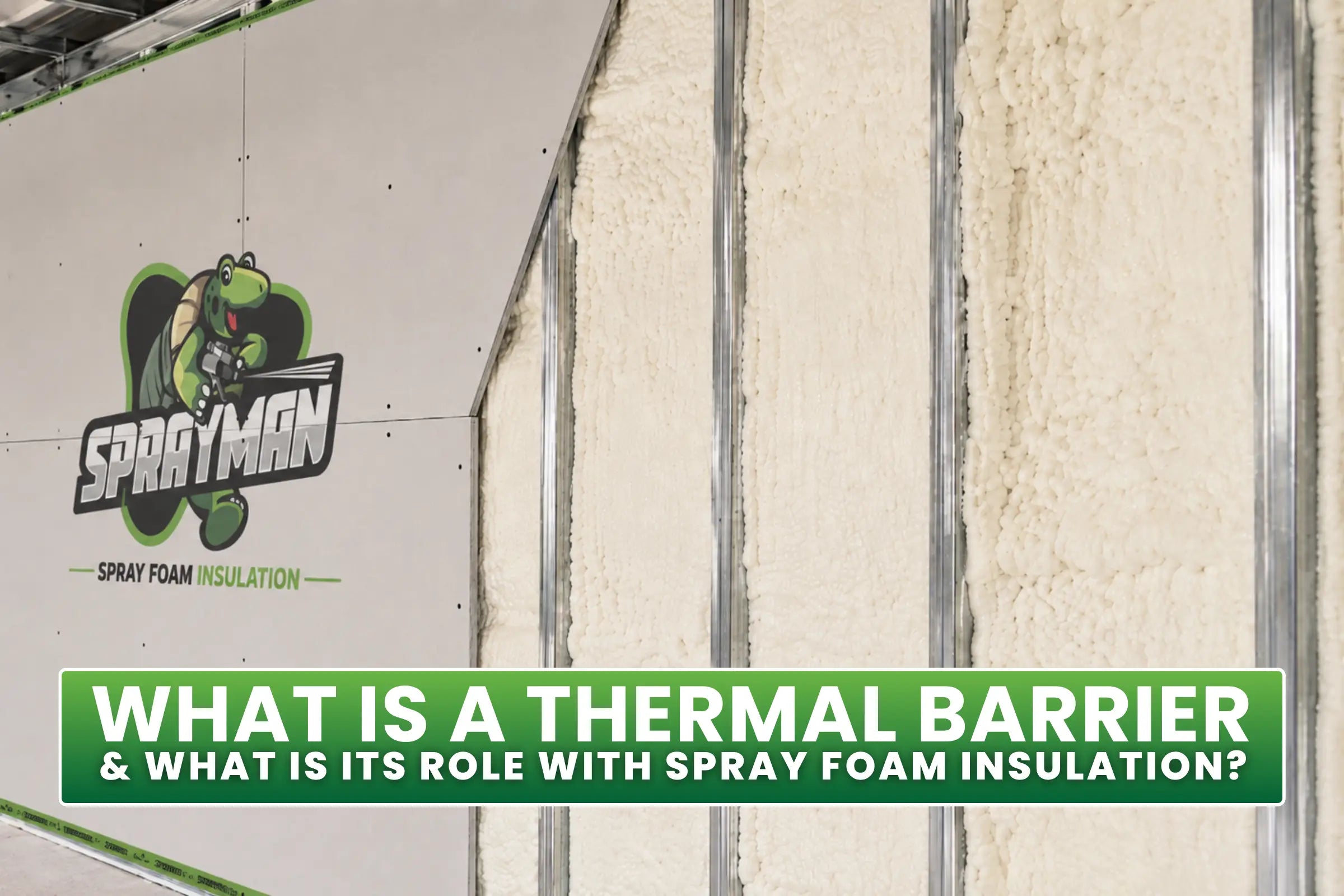
A thermal barrier is a separate, fire-safety requirement for foam plastic insulation. Its primary purpose is fire protection rather than improving the envelope's energy performance, and a thermal barrier is commonly required by code in many interior foam-plastic assemblies
Frequently Asked Questions
The following questions come up most often when homeowners research their home's thermal envelope.
Is a Thermal Envelope the Same as Insulation?
No. Insulation is one part of the thermal envelope, alongside air sealing and the building components it covers. A home can have thick insulation and still have a weak thermal envelope if air leaks aren't addressed.
How Thick Should Spray Foam Be for a Strong Thermal Envelope?
Spray foam thickness should match the manufacturer's coverage guidance for the specific area being sealed, since too little foam leaves the gap incomplete and too much wastes material. Getting spray foam insulation thickness right matters just as much for a strong thermal envelope as choosing the right product in the first place.
What Are the Main Parts of a Thermal Envelope?
The main parts are the exterior walls, roof or attic floor, foundation or crawl space, and windows and doors, along with the insulation and air sealing built into each of them.
How Do You Insulate a Rim Joist in a Thermal Envelope?
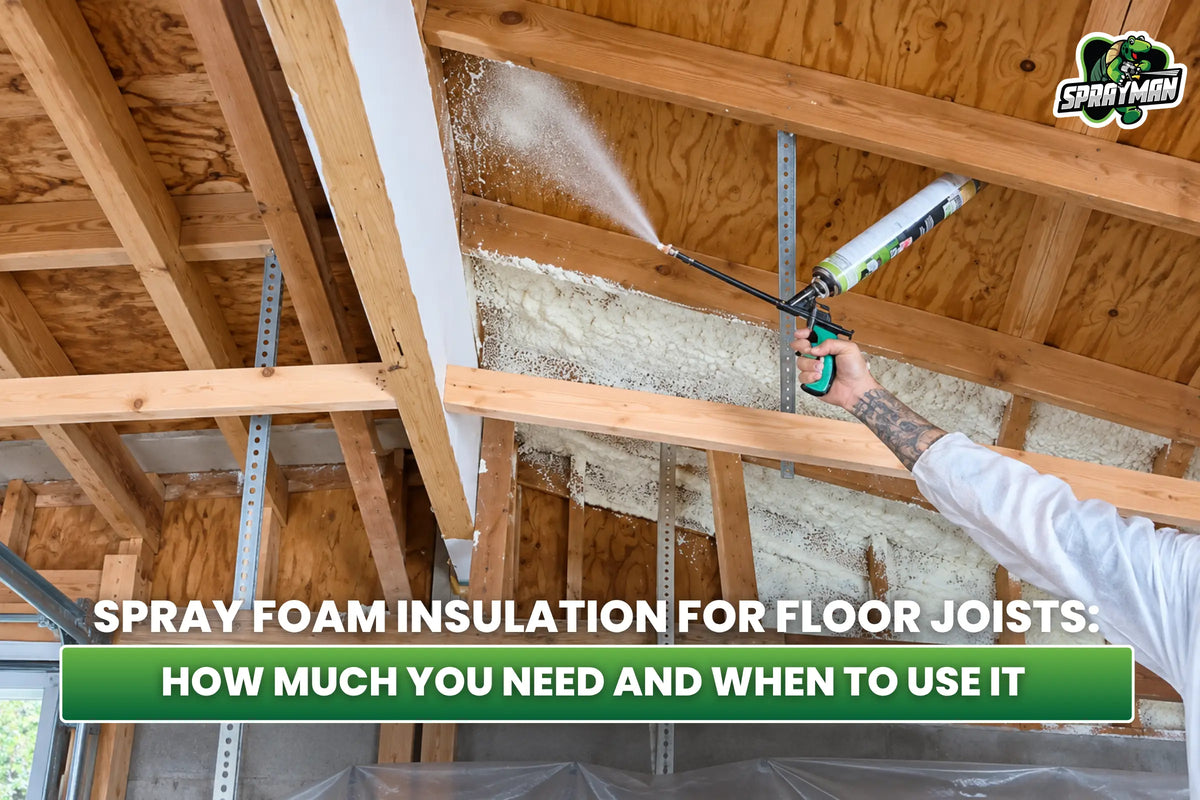
You insulate a rim joist by sealing the band joist cavity with spray foam in even passes, following the product's application thickness and any local inspection requirements. Done well, rim joist insulation with spray foam closes one of the most common gaps in a thermal envelope without requiring a larger renovation.
Can Spray Foam Alone Fix a Weak Thermal Envelope?
Spray foam can address insulation and air leakage in suitable locations, but it cannot by itself correct every thermal-envelope problem. Windows, doors, thermal bridges, moisture control, ventilation, and continuity between assemblies may also need attention.
Conclusion
Many weak points occur at small, irregular gaps and assembly transitions, although large under-insulated areas can also dominate overall heat loss. Rim joists, attic hatches, and sill plates are practical places to start.
Browse Sprayman's spray foam insulation lineup to find the right product for sealing these gaps in your home's thermal envelope.

Leave a comment
This site is protected by hCaptcha and the hCaptcha Privacy Policy and Terms of Service apply.